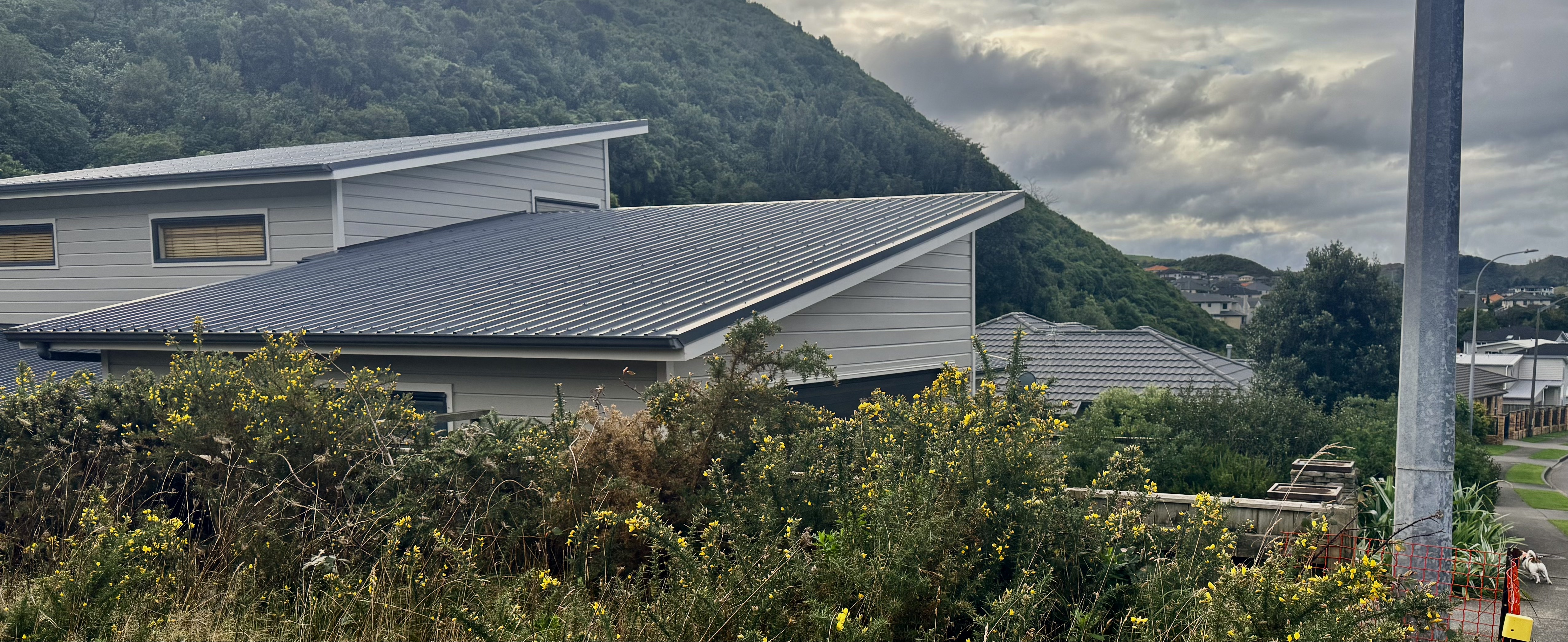
6.Landowner's guide to gorse management
If you own or manage land anywhere in Wellington's hill country, there's a good chance gorse is already on it, or close enough to reach it. This guide covers what every landowner should know before deciding what to do about it.
1. Act now — gorse will not wait for you
Gorse is one of the fastest-establishing weeds in New Zealand, and it grows more vigorously here than almost anywhere else in the world. A handful of plants on a hillside can become a dense, thorny thicket within a few seasons, and each mature plant adds hundreds of seeds per square metre to a seed bank that can remain viable in the soil for decades.
The earlier you act, the smaller and cheaper the job. Treating scattered young plants is straightforward. Treating an established, mature stand — with its accumulated seed bank, resprouting root system, and risk to neighbouring land — is a multi-year undertaking. If you've noticed gorse establishing on your property, the single most useful thing you can do is start now, not next season.
2. It's your responsibility as the landowner
Gorse is officially recognised as a pest plant under Greater Wellington Regional Council's Regional Pest Management Plan, and — like other declared pests — responsibility for controlling it on private land sits primarily with the landowner or occupier. Councils provide guidance, and in some cases support or shared control programmes, but they are not generally responsible for clearing gorse on privately owned land on your behalf.
In practice, this means:
- You are expected to manage gorse on land you own or occupy, particularly where it risks spreading to neighbouring properties or reserve land
- Council can and does follow up on complaints about uncontrolled infestations, and has issued formal notices to landowners in the past where gorse has been left unmanaged
- Waiting for someone else to deal with it isn't a safe assumption — check your specific obligations with Greater Wellington Regional Council, as pest plant rules can vary by area and by how established gorse already is on your land
This isn't about placing blame — most landowners inherit gorse rather than plant it. But taking ownership of the problem early, rather than treating it as someone else's job, is what actually gets it under control.
3. Know your enemy before you treat it
Gorse is a genuinely difficult plant to manage well, and the wrong method can make things worse rather than better. Before choosing how to deal with gorse on your property, it's worth understanding a few things about how it behaves:
The seed bank is the real enemy
Removing visible plants — by cutting, burning, or spraying — does nothing to the thousands of dormant seeds already in the soil. Any treatment that isn't followed by seedling management in the following one to two seasons will likely see the site reinfest.
Fire and unplanned mechanical clearing can make it worse
Heat triggers mass germination from the seed bank, and soil disturbance from clearing has the same effect. Neither should be used without a firm follow-up and replanting plan.
Terrain determines your options
Flat, accessible land can usually be treated with standard ground-based herbicide application. Steep or inaccessible hillside — common across Wellington — often needs different methods, including drone-assisted spraying, to be treated safely and effectively at all.
A single treatment is rarely the end of it
Effective gorse control is a sequence — treatment, followed by native planting, followed by seedling monitoring over the next couple of years — not a one-off job.
Understanding this before you start means fewer wasted treatments, less money spent on approaches that won't hold, and a much better chance the job actually stays done. If you're unsure what's right for your land, this is exactly the kind of question the Trust can help you think through.
4. Work together — gorse doesn't respect your fence line
Gorse seed doesn't stop at a property boundary, and neither does regrowth. One of the most common reasons individual gorse control efforts fail is simple: a landowner treats their own land thoroughly, only to have gorse reinvade from an untreated neighbouring property, reserve margin, or road verge within a season or two.
This is why coordinated, cross-boundary action matters as much as the treatment method itself. If you're dealing with gorse, it's worth:
- Talking to neighbouring landowners about treating adjoining infestations together, or at least in the same season
- Checking whether nearby reserve or council land is part of the same infestation, and who is responsible for it
- Reaching out to the Trust if your property borders land under multiple ownership — coordinating access, timing, and treatment across boundaries is exactly the kind of facilitation we can help with
Treating gorse in isolation on a single property, while everything around it stays untreated, is one of the most common ways good intentions and real money get wasted.
5. Every property that gets treated helps save Wellington's hills
Wellington's gorse problem is regional in scale, but it is made up of thousands of individual properties — yours included. Every hillside that gets treated properly, replanted with natives, and followed through to canopy closure is a permanent piece of the wider hills reclaimed from gorse and returned to native forest.
You don't have to solve Wellington's gorse problem on your own, and you're not expected to. But taking responsibility for your own land, acting early, treating it properly, and coordinating with your neighbours is a genuine and necessary contribution to something much bigger — safer, healthier, more resilient hills for the whole region. The Trust exists to support landowners through exactly this process. If you're ready to start, or just want advice on what's right for your property, get in touch.